Introduction
In today’s competitive academic environment, students often experience stress, anxiety, and mental fatigue. One of the most effective natural solutions to overcome these challenges is yoga.
Yoga for students is not just about physical movement; it is a holistic practice that improves mental clarity, emotional balance, and overall well-being. By practising simple yoga poses regularly, students can manage stress and develop a positive mindset.
Why Yoga is Important for Students?
With increasing academic pressure, yoga for students helps in maintaining balance between studies and mental health. It improves concentration, reduces stress, and boosts confidence, making it an essential part of student life.
Best Yoga Poses for Students and Their Benefits
1. Tadasana (Mountain Pose)
Benefits:
- Improves posture by aligning the spine, which is essential for students who sit for long study hours
- Enhances concentration by encouraging stillness and body awareness
- Builds confidence and physical stability
- Strengthens legs, core, and back muscles
- Promotes better breathing habits by opening the chest
- Helps reduce fatigue caused by prolonged sitting
2. Vrikshasana (Tree Pose)
Benefits:
- Increases focus and mental clarity by requiring balance and attention
- Improves coordination between mind and body
- Strengthens legs, ankles, and core muscles
- Enhances patience and mindfulness
- Helps students stay calm under pressure, especially during exams
- Boosts self-discipline and emotional control
3. Bhujangasana (Cobra Pose)
Benefits:
- Reduces fatigue and relieves stress accumulated from long study sessions
- Strengthens the spine and improves flexibility
- Opens the chest and improves lung capacity
- Stimulates abdominal organs, aiding digestion
- Helps reduce symptoms of anxiety and mild depression
- Energises the body and refreshes the mind
4. Balasana (Child’s Pose)
Benefits:
- Provides instant relaxation and stress relief
- Calms the nervous system and reduces anxiety
- Gently stretches the back, shoulders, and hips
- Helps in emotional release and mental reset
- Improves focus by giving the mind a break
- Ideal pose for relaxation between study sessions
5. Surya Namaskar (Sun Salutation)
Benefits:
- Improves overall physical fitness by engaging the entire body
- Enhances flexibility, strength, and stamina
- Boosts blood circulation, improving brain function
- Increases energy levels, reducing laziness and fatigue
- Improves focus, discipline, and time management
- Supports weight management and physical health
6. Padmasana (Lotus Pose) with Meditation
Benefits:
- Improves concentration and memory retention
- Promotes deep breathing and relaxation
- Reduces anxiety, stress, and negative thoughts
- Encourages mindfulness and self-awareness
- Helps students develop emotional stability
- Enhances decision-making ability and clarity of thought
7. Anulom Vilom (Breathing Exercise)
Benefits:
- Controls breathing patterns and calms the nervous system
- Reduces stress, anxiety, and mental clutter
- Improves oxygen supply to the brain, enhancing focus
- Balances both hemispheres of the brain for better thinking
- Promotes inner peace and emotional balance
- Helps students stay calm during exams and presentations
How Yoga Builds Positivity in Students?
Regular practice of yoga for students helps in developing a positive mindset. It reduces negative thinking, improves self-confidence, and encourages emotional stability. Students become more focused, calm, and motivated in their daily lives.
Importance of Yoga in Schools
Schools play a crucial role in promoting healthy habits among students. Including yoga sessions helps students stay physically active and mentally relaxed.
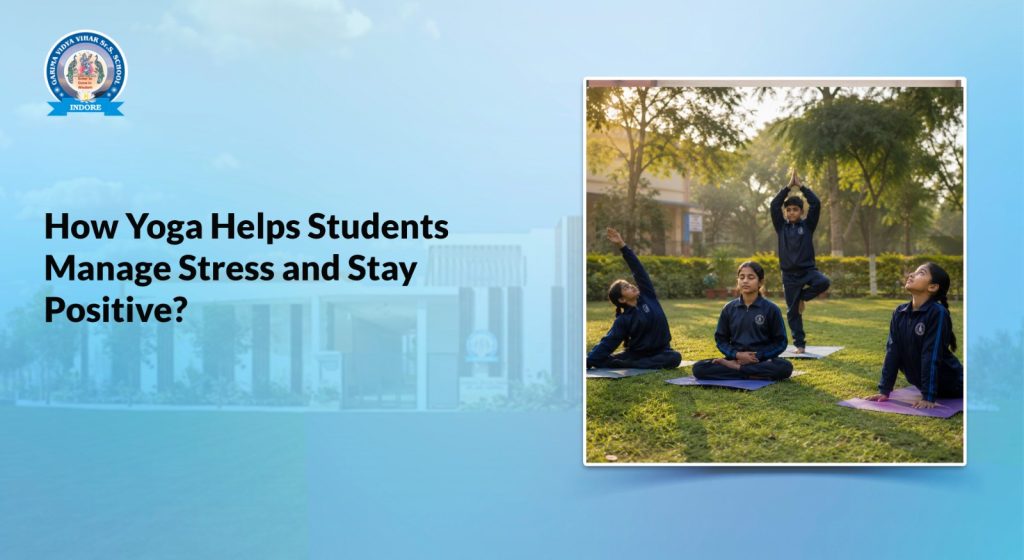
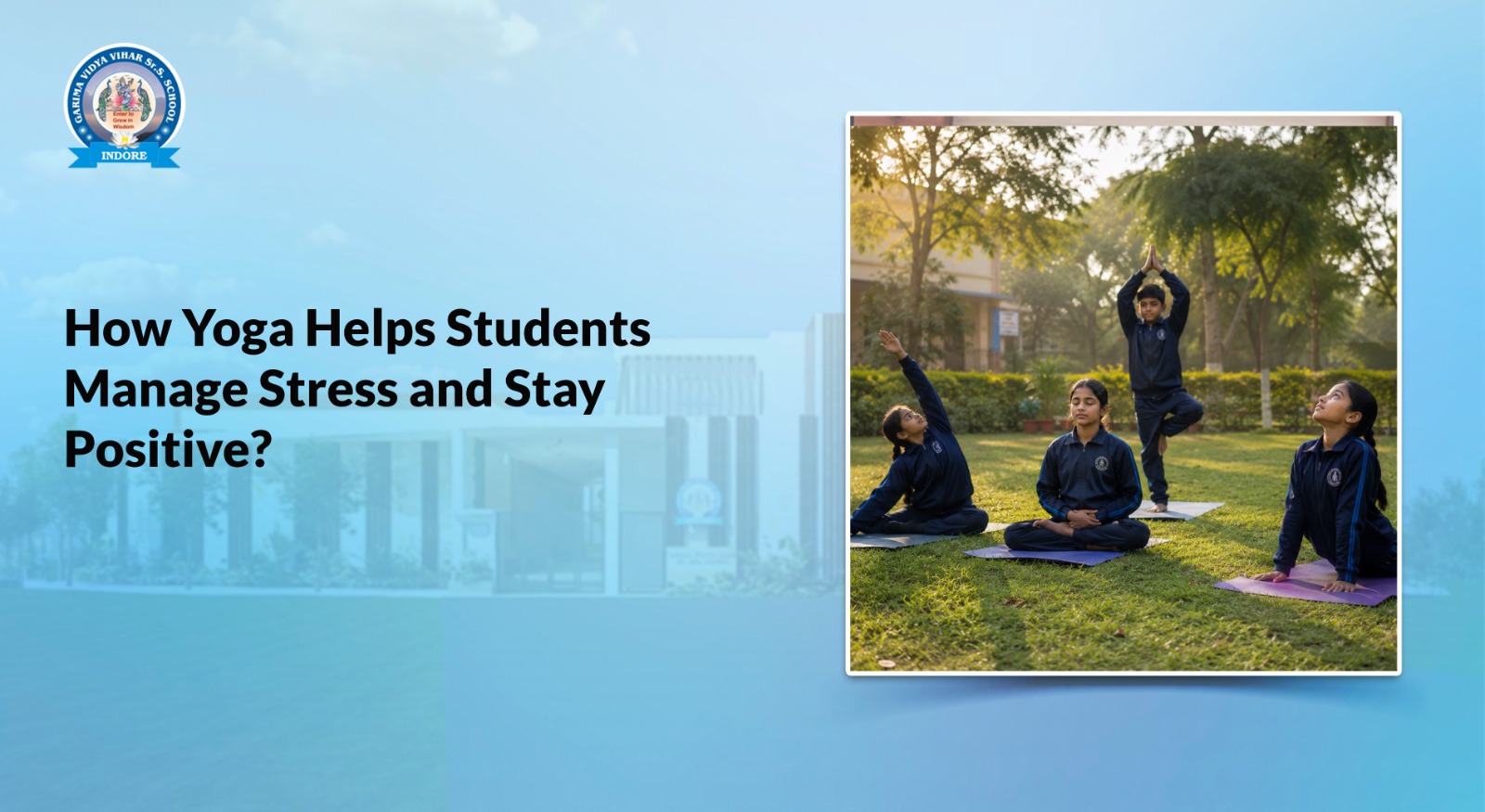
Institutions like Garima Vidya Vihar, recognised among the best CBSE schools in Indore, focus on holistic development by encouraging yoga along with academics. This helps students manage stress effectively while excelling in studies.
Conclusion
Yoga is a powerful tool that helps students manage stress and stay positive. Through simple poses and breathing techniques, yoga for students improves both mental and physical health.
Incorporating yoga into daily routines enables students to become more focused, confident, and emotionally balanced, preparing them for a successful future.
FAQs
Q1. Which yoga is best for students?
Tadasana, Vrikshasana, Balasana, and Surya Namaskar are highly beneficial for students.
Q2. How does yoga help students reduce stress?
Yoga relaxes the mind, controls breathing, and lowers stress hormones.
Q3. Can students practise yoga daily?
Yes, practising yoga daily for 15–20 minutes is highly beneficial.
Q4. Does yoga improve concentration?
Yes, yoga enhances focus, memory, and mental clarity.
Q5. Why should schools include yoga?
Yoga helps in overall student development by improving physical health and mental well-being.