Introduction: A Changing Approach to Learning
For decades, traditional education has been the foundation of learning. Classrooms, textbooks, and exams have shaped how students gain knowledge and build their future. But as the world evolves, so do the expectations from education, bringing the discussion of traditional education vs modern education into focus.
Today, many parents and educators are asking an important question, is traditional education enough, or do students need something more to succeed in the real world?
What is Traditional Education?
Traditional education focuses on structured learning through textbooks, lectures, and exams. It emphasises discipline, theoretical knowledge, and a fixed curriculum.
While this system has helped generations build strong academic foundations, it often limits creativity and practical application of knowledge.
Where Traditional Education Falls Short?
The biggest limitation of traditional education is its focus on memorisation. Students are often trained to learn answers rather than understand concepts deeply.
This approach may help in exams, but it doesn’t always prepare students for real-life challenges. Skills like problem-solving, communication, and adaptability are not always given enough importance.
As a result, students may struggle when faced with situations that require independent thinking and decision-making.
Also read: Why Concept-Based Learning Makes Students Smarter?
The Rise of Modern Learning
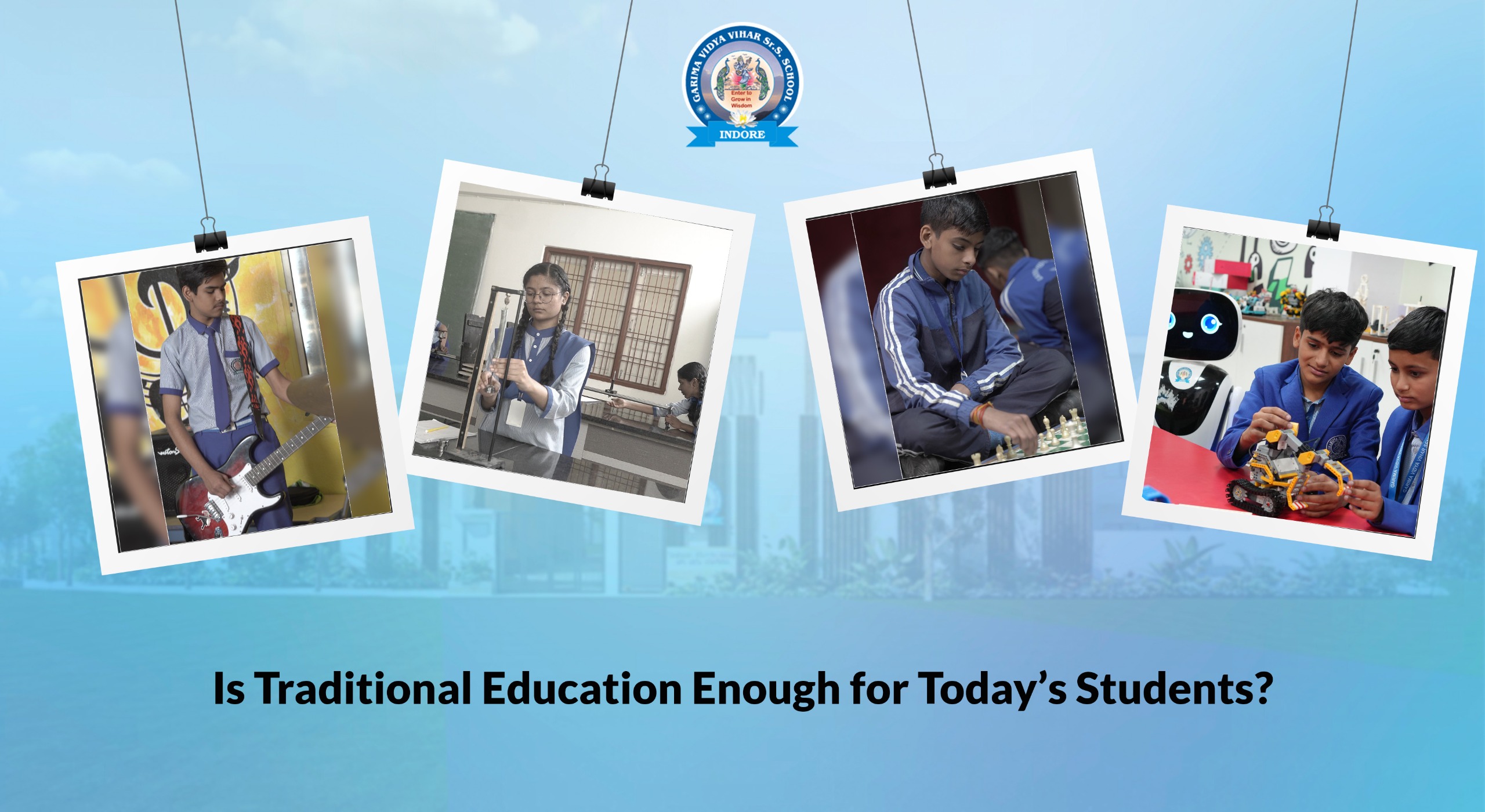
Modern education focuses on a more holistic approach. It combines academic knowledge with practical learning, activities, and skill development.
Concepts like project-based learning, digital education, and experiential learning are becoming more common. These methods encourage students to explore, ask questions, and apply what they learn.
This shift highlights the growing importance of traditional education vs modern education, where the goal is to find the right balance between both.
Why Students Need More Than Just Academics
In today’s world, success depends on more than just marks. Students need to be confident, creative, and capable of adapting to change.
Skills like communication, emotional intelligence, teamwork, and critical thinking play a crucial role in personal and professional growth. These are areas where modern learning approaches add significant value.
Key Skills Students Need Today
To succeed in the future, students should develop:

These skills help students move beyond textbook knowledge and prepare them for real-world situations.
Role of Schools in Bridging the Gap
Schools play a crucial role in combining the strengths of both traditional and modern education. While maintaining academic excellence, they can introduce activities, projects, and interactive learning methods.
By creating a balanced environment, schools ensure that students gain knowledge as well as the ability to apply it effectively.
How Garima Vidya Vihar Balances Both Approaches?
At Garima Vidya Vihar, the focus is on creating a learning environment that goes beyond traditional methods. While academic excellence remains a priority, equal importance is given to practical learning, activities, and skill development.
Students are encouraged to participate in projects, discussions, and co-curricular activities that enhance their confidence and creativity. This balanced approach ensures that students are not only prepared for exams but also for life.
It reflects the ideal blend of traditional education and modern education, helping students grow into well-rounded individuals.
Conclusion: Finding the Right Balance
Traditional education is not outdated, it still provides a strong foundation. However, on its own, it may not be enough for today’s fast-changing world.
The key lies in balance. By combining structured learning with practical experiences and skill development, students can be truly prepared for the future.
Education today is not just about what students learn, but how they learn and how well they can apply it.
FAQs
Q1. What is traditional education?
Traditional education focuses on classroom-based learning, textbooks, lectures, and exams. It mainly emphasises theoretical knowledge and structured teaching methods.
Q2. Is traditional education enough for students today?
Traditional education provides a strong academic base, but on its own, it may not be enough. Students today also need practical exposure, skill-based learning, and real-world understanding.
Q3. What is the difference between traditional education and modern education?
The main difference lies in the approach. Traditional education focuses on memorisation and theory, while modern education emphasises practical learning, critical thinking, and overall development.
Q4. Why is modern education important for students?
Modern education helps students develop important life skills like problem-solving, communication, creativity, and adaptability, which are essential for future success.
Q5. Which is the best CBSE school in Indore for balanced learning?
Parents often look for the best CBSE school in Indore that offers both academic excellence and skill-based learning. Schools like Garima Vidya Vihar are known for maintaining this balance by combining traditional teaching with modern educational practices.
Q6. How does Garima Vidya Vihar support modern learning?
Garima Vidya Vihar focuses on activity-based learning, practical exposure, and student engagement along with strong academics. This helps students gain confidence and prepares them for real-world challenges.