Introduction
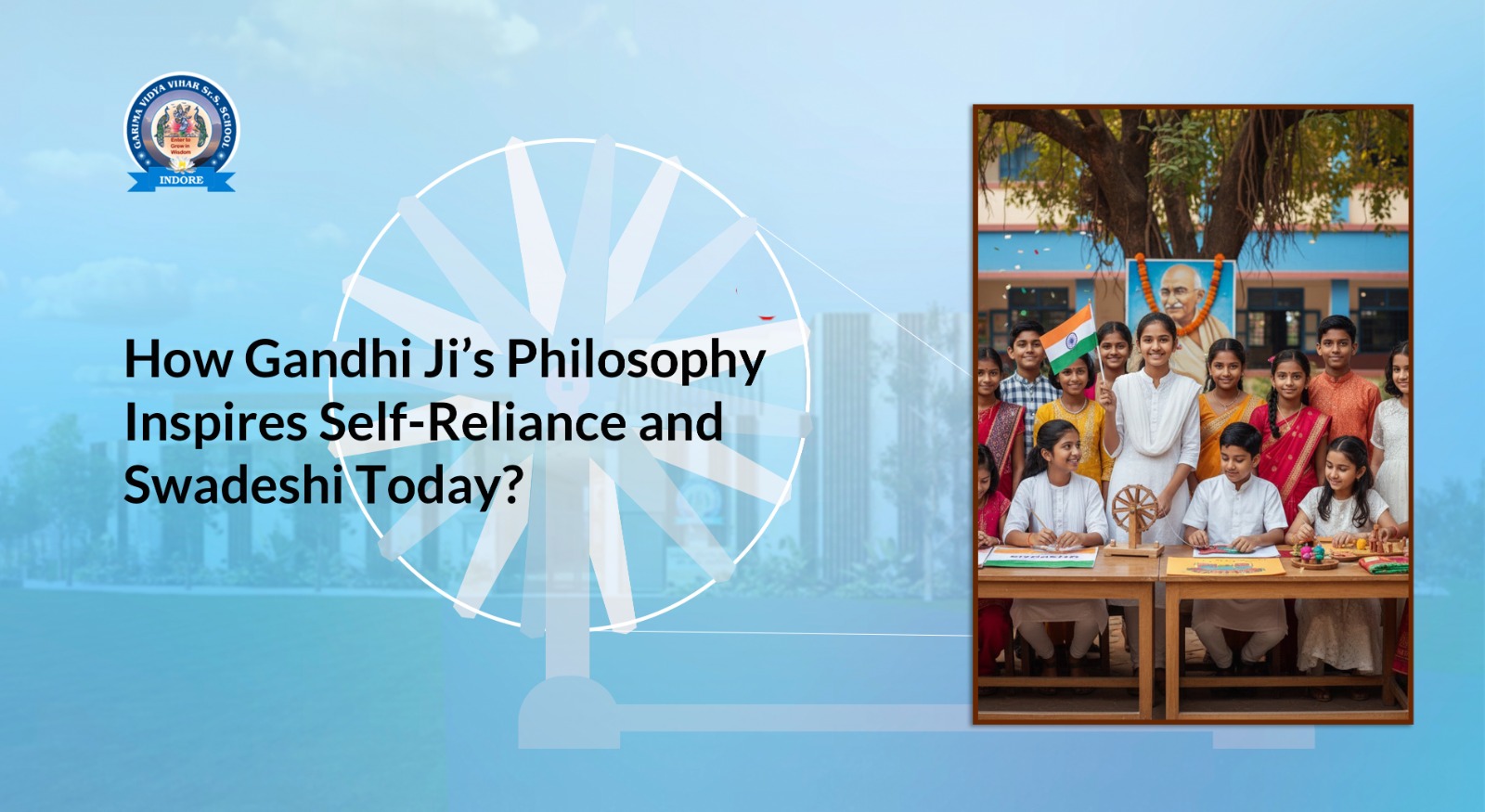
Mahatma Gandhi’s vision of India went beyond freedom from colonial rule. He emphasised Swadeshi, the use of indigenous goods, and self-reliance as the pillars of a strong, independent nation. Today, as India embraces student role in Atmanirbhar Bharat, Gandhi Ji’s philosophy serves as a guiding light, particularly for students. The energy, innovation, and curiosity of students make them vital contributors to creating a self-reliant India, blending tradition with modernity. Understanding Gandhi’s teachings can inspire students to play an active role in fostering Swadeshi values in education, entrepreneurship, and daily life.
Gandhi Ji’s Philosophy of Swadeshi and Self-Reliance
Gandhi Ji advocated for economic and social self-sufficiency. For him, Swadeshi was not merely a boycott of foreign goods. Instead, it was a holistic approach to strengthen local industries, revive rural livelihoods, and promote ethical consumption. Moreover, he believed that each individual had a responsibility to contribute to society, whether through simple acts like wearing Khadi or supporting local artisans. This philosophy laid the foundation for an India where self-reliance is central, not just politically, but also socially and economically.
Today, students can learn from this ideology. By making mindful choices, whether in the products they use, the knowledge they acquire, or the innovations they create, they can positively impact the nation’s journey towards self-reliance. Additionally, by embracing these values early, young citizens help carry forward Gandhi Ji’s vision in practical ways.
Student Role in Atmanirbhar Bharat
Students, as the next generation of leaders and innovators, have a pivotal role in realising the vision of Atmanirbhar Bharat. By connecting Gandhi Ji’s philosophy with modern initiatives, students can actively participate in building a self-reliant India.
1. Embracing Swadeshi in Daily Life
The simplest way for students to contribute is by practising Swadeshi in their daily choices. This includes supporting local products, using domestically manufactured goods, and promoting Indian brands within their communities. Schools can encourage students to organise Swadeshi fairs or exhibitions, showcasing local crafts, innovations, and sustainable products.
2. Innovation and Entrepreneurship
Gandhi Ji believed in empowering individuals to create solutions for society. Today, students can translate this into entrepreneurial ventures, developing innovative solutions, creating startups that cater to local needs, and designing products that strengthen domestic industries. This not only encourages economic self-reliance but also nurtures problem-solving skills and leadership among students.
3. Integrating Sustainable Practices
Sustainability was integral to Gandhi Ji’s vision. Students can contribute to Atmanirbhar Bharat by embracing sustainable practices, reducing waste, conserving energy, supporting eco-friendly products, and spreading awareness about ethical consumption. Schools can introduce sustainability projects where students learn to create local, eco-conscious solutions, reflecting Gandhi Ji’s emphasis on simple, responsible living.
4. Participating in Government and Community Initiatives
Modern initiatives like Atmanirbhar Bharat Abhiyan provide platforms for students to engage actively. By participating in skill development programs, innovation challenges, and community service projects, students can contribute to national growth while developing skills that make them self-reliant individuals. Gandhi Ji’s teachings emphasised that change begins with action, and students can be at the forefront of such efforts.
5. Promoting Indigenous Knowledge
Gandhi Ji revered India’s indigenous knowledge systems, from crafts to agriculture. Students can play a role in documenting, learning, and promoting these skills, ensuring that local traditions are preserved while contributing to modern economic development. Schools and colleges can integrate local craft workshops, traditional farming techniques, and rural innovation programs to nurture this knowledge among students.
Educational Institutions as Enablers
Schools and universities are crucial in shaping the mindset of students. Incorporating Gandhi Ji’s philosophy into the curriculum can inspire young minds to embrace Swadeshi and self-reliance. Projects, workshops, and competitions that encourage practical engagement with local industries, community welfare, and sustainable innovation can help students internalise the values of Atmanirbhar Bharat.
By aligning educational practices with national priorities, institutions can ensure that students not only learn theoretical concepts but also apply them in ways that strengthen the country’s economy and society.
Real-Life Examples of Student role in Atmanirbhar Bharat
Across India, students have showcased how they can embody Gandhi Ji’s ideals:
- Developing low-cost solar devices and sustainable products for local communities.
- Supporting local artisans by creating digital platforms for their crafts.
- Participating in school and college campaigns to promote Khadi and other indigenous products.
- Launching startups that address local challenges in agriculture, technology, and healthcare.
These examples demonstrate that students, when guided by the principles of Swadeshi and self-reliance, can make tangible contributions to India’s journey towards Atmanirbhar Bharat.
How Garima Vidya Vihar is Nurturing Self-Reliant Students?
At Garima Vidya Vihar, the philosophy of Swadeshi and self-reliance is not just a concept. It is actively integrated into the learning experience. The school encourages students to understand the importance of local resources, indigenous crafts, and responsible consumption through practical activities. From organising Swadeshi fairs to hands-on projects in arts, crafts, and sustainable innovation, students learn to appreciate and support India’s rich heritage while gaining modern skills.
The curriculum also includes workshops on entrepreneurship, skill development, and innovation. These sessions help students envision how they can contribute to Atmanirbhar Bharat. Teachers guide children to develop solutions for real-life challenges using locally available resources. This approach fosters creativity, critical thinking, and social responsibility. By combining traditional values with modern education, Garima Vidya Vihar ensures that students not only excel academically but also become conscious, empowered citizens ready to play their role in building a self-reliant India.
Conclusion
Gandhi Ji’s philosophy of Swadeshi and self-reliance is as relevant today as it was a century ago. By linking these principles to Atmanirbhar Bharat, students can play a transformative role in shaping India’s future. Through conscious choices, innovation, sustainability, and active participation in community and government initiatives, students can help build a nation that is economically robust, socially responsible, and self-sufficient.
The student’s role in Atmanirbhar Bharat is not just a contribution to policy but a commitment to a vision where India thrives on its talent, knowledge, and indigenous resources. Gandhi Ji’s teachings remind us that self-reliance begins with individual action, and today’s students are uniquely positioned to carry this legacy forward.