Introduction: Understanding Peer Pressure
Growing up in a school environment means being surrounded by friends, classmates, and social groups. While these relationships help students learn and grow, they can also influence decisions in unexpected ways. This influence, often known as peer pressure, can shape how students think, behave, and respond to situations. Understanding the impact of peer pressure on students is important because it can either support a child’s growth or lead them in the wrong direction if not guided properly.
Types of Peer Pressure in Schools
Peer pressure is not always negative. In fact, it can be both positive and negative depending on the situation.
Positive peer pressure encourages students to perform better, participate in activities, and adopt good habits. For example, a student may feel motivated to study harder when surrounded by focused classmates.
On the other hand, negative peer pressure can push students towards unhealthy choices, such as avoiding studies, engaging in risky behaviour, or trying to fit in by doing things they are uncomfortable with.
How Peer Pressure Affects Students?
The impact of peer pressure on students can be seen in different aspects of their lives.
Academically, students may lose focus if they feel the need to prioritise social acceptance over studies. Emotionally, they may feel stressed, anxious, or confused while trying to balance their own values with group expectations.
Behaviourally, some students may change their actions, language, or habits just to feel accepted. Over time, this can affect their confidence and decision-making abilities.
Recognising the Signs of Negative Peer Pressure
It’s not always easy to identify when a student is being influenced in the wrong way. However, some common signs include sudden changes in behaviour, loss of interest in studies, increased secrecy, or a strong need to fit in with a particular group.
When these changes are noticed early, it becomes easier for parents and teachers to step in and guide the student in the right direction.
Role of Teachers in Guiding Students
Teachers play a crucial role in shaping how students handle peer pressure. A supportive classroom environment encourages open communication, where students feel comfortable sharing their thoughts and concerns.
By promoting values like respect, individuality, and critical thinking, teachers help students understand that it’s okay to have their own opinions and make independent choices.
How Parents Can Help Manage Peer Influence?
Parents are equally important in helping children deal with peer pressure. Simple conversations at home can make a big difference. When children feel heard and supported, they are more likely to share their experiences openly.
Encouraging confidence, setting clear boundaries, and teaching decision-making skills help children stay grounded even when they face external influence.
Building Confidence and Decision-Making Skills
One of the best ways to reduce the negative impact of peer pressure on students is by building self-confidence. Students who believe in themselves are less likely to be influenced by others.
Activities that encourage participation, leadership, and independent thinking help students develop a strong sense of identity. When they know what they stand for, they are better equipped to handle difficult situations.
How Garima Vidya Vihar Supports Students?
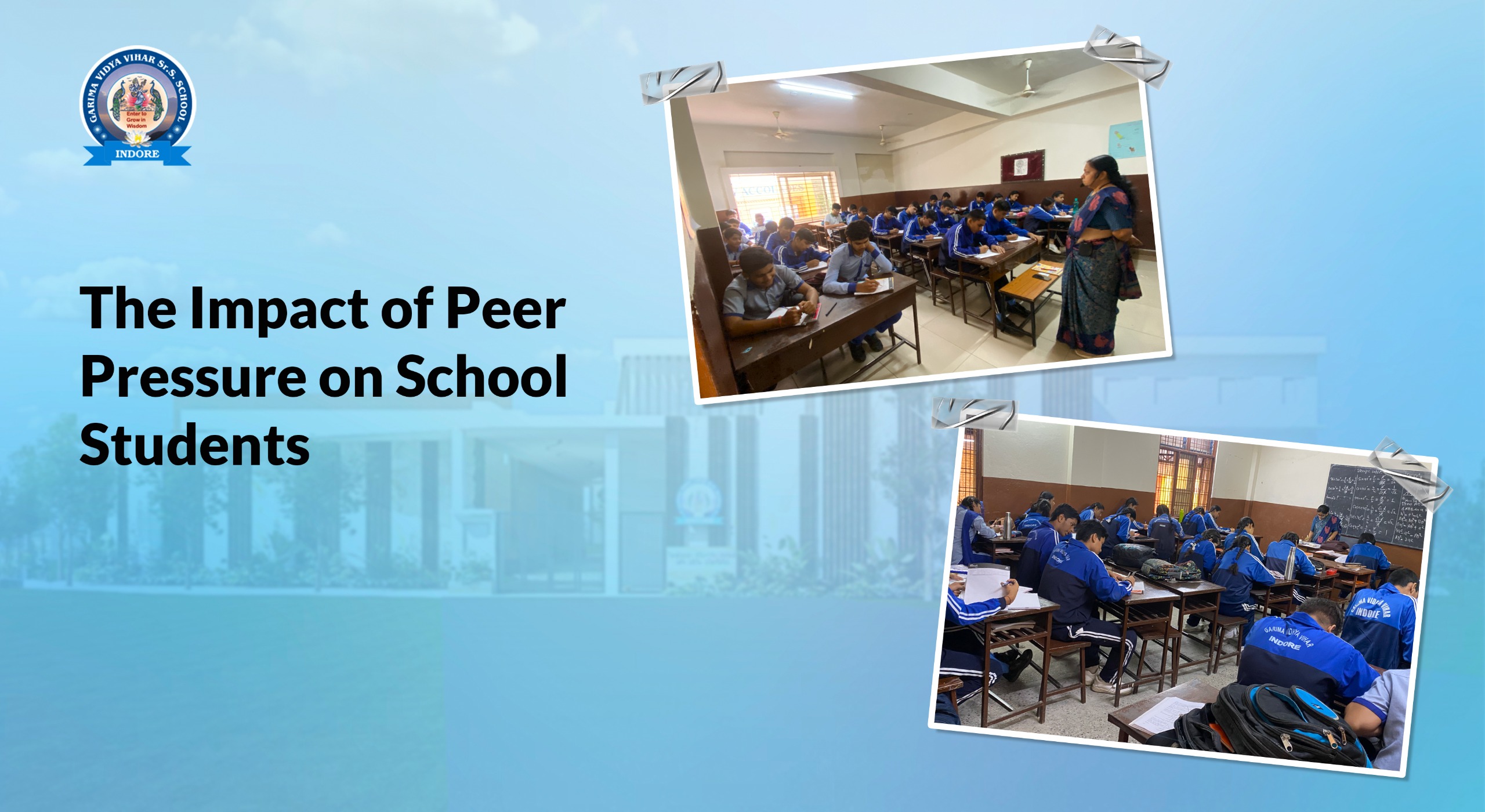
At Garima Vidya Vihar, the focus is on creating a supportive and inclusive environment where students feel valued and confident. The school encourages open discussions, group activities, and value-based learning to help students understand the importance of making the right choices.
Teachers guide students to think independently, respect others, and stay true to their values. This approach helps reduce the negative impact of peer pressure while promoting positive influence among peers.
Conclusion: Turning Peer Pressure into Positive Growth
Peer pressure is a natural part of growing up, but it doesn’t have to be harmful. With the right guidance from schools and parents, students can learn to turn peer influence into something positive.
By building confidence, encouraging open communication, and promoting strong values, we can ensure that students grow into individuals who make thoughtful decisions and stay true to themselves.
FAQs:
Q1. What is peer pressure in school students?
Peer pressure refers to the influence that classmates or friends have on a student’s behaviour, choices, and actions, whether positive or negative.
Q2. What is the impact of peer pressure on students?
The impact of peer pressure on students can affect their academic performance, emotional well-being, and behaviour. It can either motivate them positively or lead to stress and poor decision-making.
Q3. How can students deal with peer pressure?
Students can manage peer pressure by building self-confidence, thinking independently, choosing supportive friends, and seeking guidance from parents or teachers when needed.
Q4. What are examples of positive peer pressure?
Positive peer pressure includes encouraging friends to study, participate in activities, follow rules, and adopt healthy habits.
Q5. How do schools help students handle peer pressure?
Schools create supportive environments, promote value-based education, and encourage open discussions to help students make responsible choices and resist negative influence.
Q6. Which is the best CBSE school in Indore for overall student development?
There are several good CBSE schools in Indore, but parents often look for institutions that focus not just on academics but also on values, confidence, and life skills. Schools like Garima Vidya Vihar are known for providing a balanced environment where students are guided to handle challenges like peer pressure while growing academically and personally.
Q7. How does Garima Vidya Vihar support students facing peer pressure?
Garima Vidya Vihar focuses on creating a positive and inclusive environment where students feel heard and supported. Through interactive sessions, value-based learning, and teacher guidance, the school helps students build confidence, make independent decisions, and handle peer pressure in a healthy way.