Introduction: Learning Beyond Books
Education today is no longer limited to textbooks and classrooms. While theory builds knowledge, it is practical learning that helps students truly understand and apply what they learn.
The importance of practical learning has grown significantly as the world moves towards skill-based education. Parents and educators are now realising that students need more than just memorised answers; they need real experiences that prepare them for real life.
What is Practical Learning?
Practical learning means learning by doing. It includes activities, experiments, projects, and hands-on experiences that allow students to actively participate in the learning process.
Whether it’s building a model, participating in science experiments, or exploring robotics, this approach helps students connect theory with real-world application.
Why Practical Learning Matters More Than Ever?
In today’s fast-changing world, students are expected to think critically, solve problems, and adapt quickly.
This is where the importance of practical learning becomes clear. It encourages students to ask questions, explore ideas, and understand concepts deeply instead of just memorising them for exams.
Learning becomes more engaging, meaningful, and long-lasting.
Role of Activities in Learning
Activities play a crucial role in making learning interactive and enjoyable. When students participate in group projects, creative tasks, or hands-on assignments, they become more involved in the process.
These activities help improve communication, teamwork, and confidence. Students learn how to express their ideas, collaborate with others, and approach challenges with a positive mindset.
Instead of passively listening, they actively engage and that makes all the difference.
How Robotics Enhances Learning?
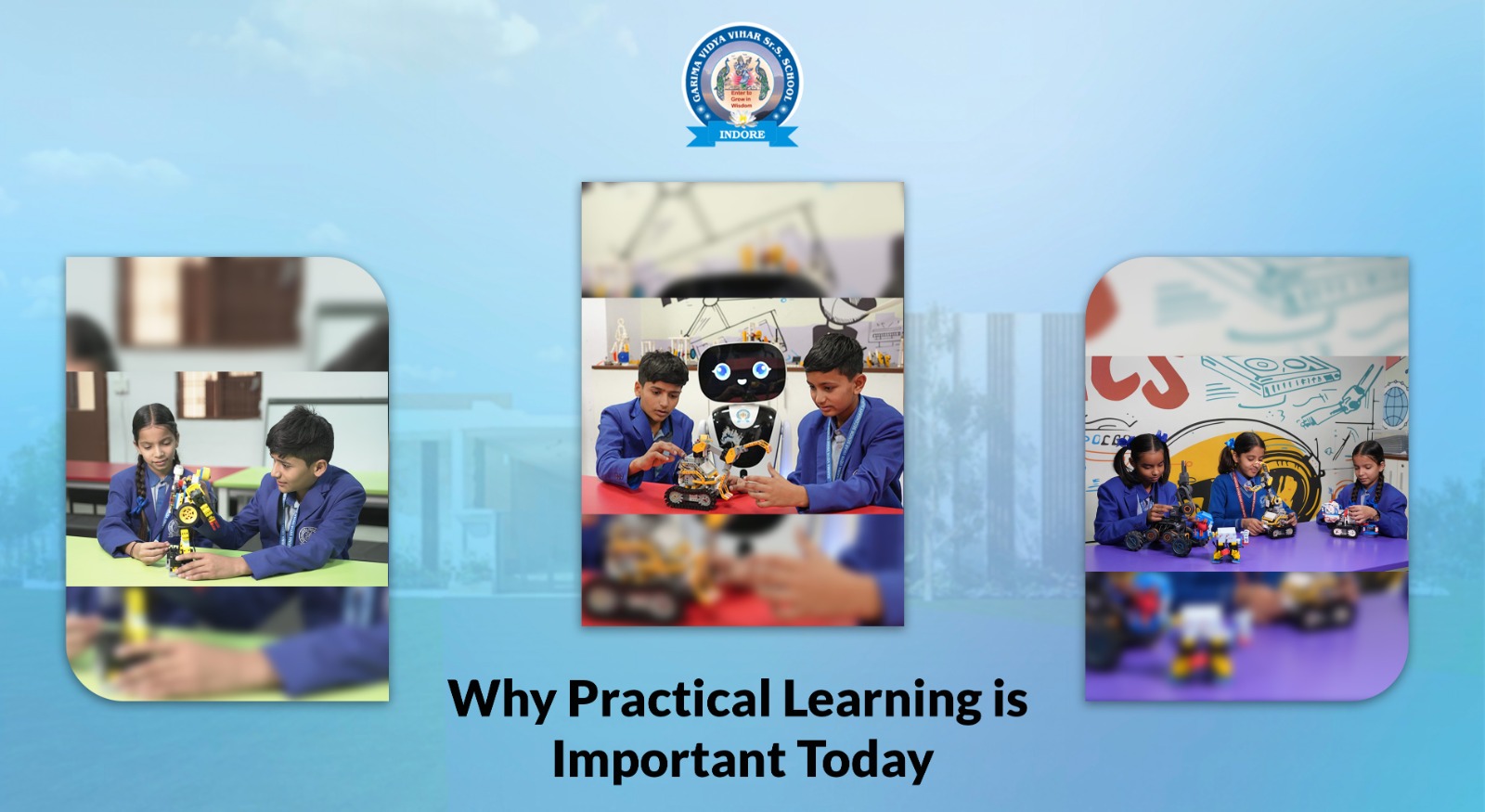
One of the most exciting aspects of modern education is the introduction of robotics. It brings together science, technology, engineering, and creativity in a way that truly excites students.
When students work on robotics projects, they don’t just learn how machines work, they learn how to think. They experiment, make mistakes, fix problems, and try again.
This process builds problem-solving skills, logical thinking, and innovation. Robotics also makes abstract concepts easier to understand by turning them into something students can see and interact with.
It transforms learning into an experience rather than a task.
Building Future-Ready Skills
Practical learning prepares students for the future by developing skills that go beyond academics.
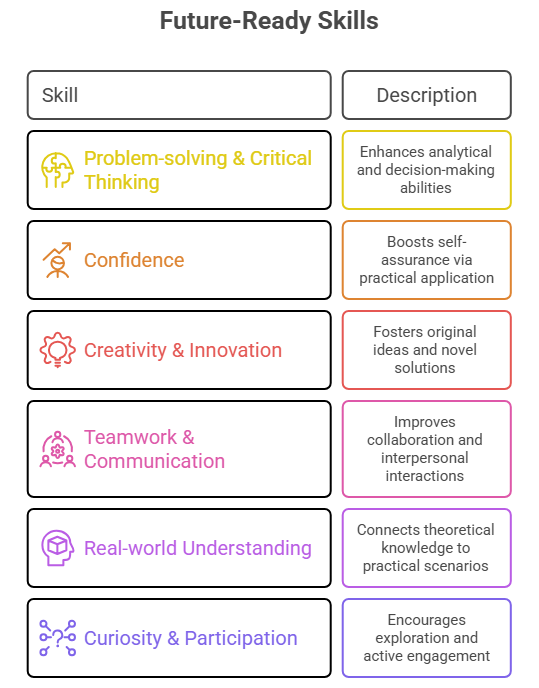
This approach ensures they are not only academically strong but also capable of facing real-world challenges.
Role of Schools in Promoting Practical Learning
Schools play a key role in creating opportunities for practical learning. By integrating activities, projects, and technology into the curriculum, they can make education more meaningful and engaging.
Encouraging participation, allowing students to explore, and giving them space to experiment helps build curiosity and a love for learning.
The importance of practical learning lies in this balance, where students gain knowledge while also learning how to use it effectively.
How Garima Vidya Vihar Encourages Practical Learning?
At Garima Vidya Vihar, the focus goes beyond traditional teaching methods. The school actively promotes learning through activities, projects, and interactive sessions that make concepts easier to understand.
Students are encouraged to participate in hands-on learning experiences, including creative projects and technology-based activities like robotics. These experiences help them explore ideas, think independently, and build confidence in their abilities.
Teachers guide students to not just learn concepts, but to apply them in real-life situations. This approach reflects the true importance of practical learning, helping students grow into capable and future-ready individuals.
Final Thought!
Education is evolving, and so are the needs of students. While theoretical knowledge provides a foundation, it is practical learning that brings that knowledge to life.
By focusing on activities, hands-on experiences, and innovations like robotics, schools can create an environment where students truly understand, explore, and grow.
In the end, students who learn by doing are the ones who are better prepared to succeed, adapt, and lead in the future.
FAQs
Q1. What is practical learning, and why is it important?
Practical learning involves hands-on activities, experiments, and real-life applications of concepts. It is important because it helps students understand topics deeply rather than just memorising them.
Q2. How does practical learning benefit students?
Practical learning improves problem-solving skills, builds confidence, enhances creativity, and helps students apply knowledge in real-life situations.
Q3. What is the role of activities and robotics in learning?
Activities and robotics make learning interactive and engaging. They help students develop logical thinking, teamwork, and innovation while making complex concepts easier to understand.
Q4. How can schools promote practical learning?
Schools can promote practical learning by including project-based activities, experiments, group tasks, and technology-driven learning methods like robotics and STEM education.
Q5. Which is the best CBSE school in Indore for practical learning?
Many parents look for the best CBSE school in Indore that focuses not only on academics but also on hands-on learning. Schools like Garima Vidya Vihar are often considered for their balanced approach, where practical learning, activities, and modern teaching methods are given equal importance.
Q6. How does Garima Vidya Vihar support practical learning?
Garima Vidya Vihar encourages students to learn through activities, projects, and technology-based learning like robotics. The school focuses on helping students understand concepts, apply them, and build skills that are useful in real life.